
Report

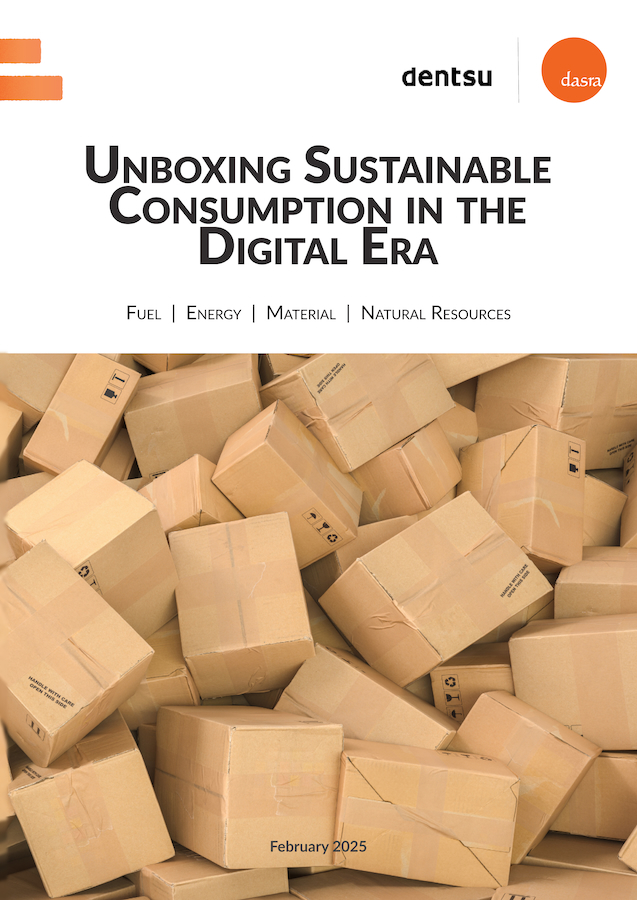
Unboxing Sustainable Consumption in the Digital Era

Data and Technology, Environment, Biodiversity, Conservation, and Climate | 28 Mar 2025
Research Reports

India stands at the crossroads of a digital revolution that promises to reshape its future. As the nation hurtles towards greater connectivity, the intersection between digital penetration and resource utilization has become a defining challenge. This report unravels the complex web of consequences that increased digital consumption has on its people and the planet. While the digital wave offers convenience and economic growth, it simultaneously intensifies environmental degradation and deepens social inequities. To safeguard the future of both people and the planet, this report urges a holistic approach to consumption, one that fosters collaboration among all sectors for sustainable development.

This report delves into four key themes, each illustrating the intersection of digital consumption and sustainability challenges that must be addressed for a greener and more equitable future.

  • Fuel: The surge in E-commerce and ride hailing services has led to an alarming rise in fuel consumption, contributing to urban congestion and skyrocketing emissions. The air we breathe and the climate we depend on are both at risk. Informal sector workers bear the brunt of this crisis, with their precarious livelihoods hanging in the balance.


  • Materials: The growing demand for smartphones and high-speed internet connectivity drives a dangerous surge in mining for minerals and metals, escalating E-waste and overwhelming our recycling systems. Improper disposal is a ticking time bomb, with vulnerable communities, especially women and children, bearing the toxic consequences of informal recycling.


  • Energy: Digitalization has propelled efficiencies in energy use, but these gains have been offset by the soaring demand for power, leaving us in a rebound effect that strains sustainability efforts. The complex relationship between digitalization and energy consumption creates a daunting challenge for the nation’s green future.


  • Natural Resources: Data centers and Fast Fashion, both products of digitalization, are ravenous consumers of water and energy. Their voracious appetite is draining already-stressed resources, precipitating water scarcity, and disturbing the ecological balance upon which both the environment and countless communities depend.

Recommendations and the Way Forward 

Strengthen Philanthropy for Decentralized Renewable Energy

  • Philanthropists can play a key role in rural and semi-urban areas by providing financial support, technical expertise, and ecosystem development to bridge energy-access gaps
  • They can de-risk investments and support community-based energy enterprises in remote regions with unreliable supply

Account for Environmental Costs of Digital Innovation

  • Improve monitoring of water and electricity usage to ensure sustainable management
  •  Promote greater transparency in private-sector resource use to inform allocation
  • Build dedicated sustainability assessment frameworks beyond ESG compliance

Position Electrification as Part of the Climate Solution 

  • Prioritize high-capacity, integrated public transport over private EV ownership
  •  Invest in multi-modal mobility rather than siloed metro/bus/rail systems
  •  Reduce battery-related emissions through recycling and renewable-powered grids

Strengthen Government–Civil Society Partnerships for Waste Management

  • Learn from global models (e.g., Bogotá, Switzerland, Norway) to formalize waste collection
  • Scale initiatives like SWaCH Pune and Hasiru Dala to integrate informal waste workers
  • Expand financial inclusion, training, and safety measures for waste pickers

Boost Public Awareness and Incentive Programs
  • Implement deposit-refund schemes for e-waste similar to plastic bottles
  •  Expand Reverse Vending Machines with incentives like cashback or transit discounts.
  •  Run targeted campaigns on material literacy and responsible consumption