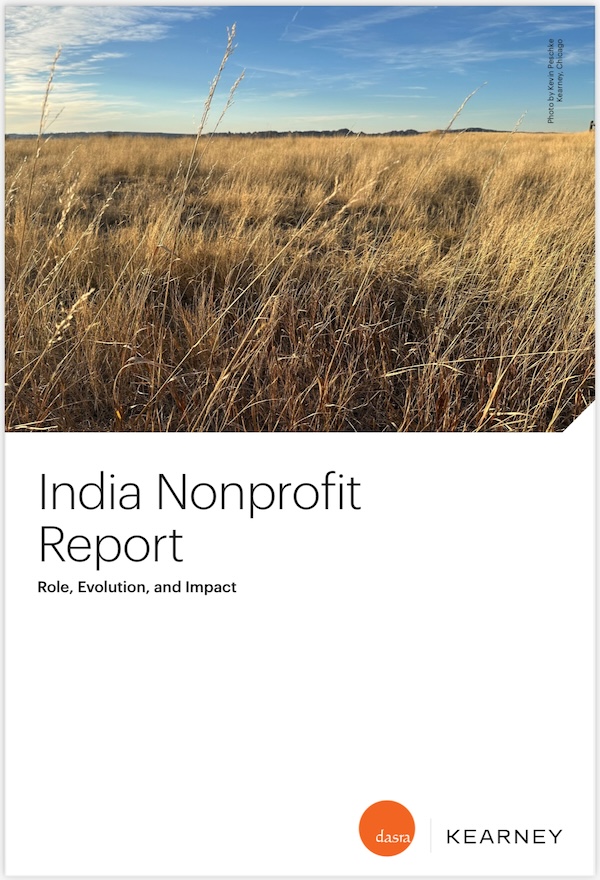

India Nonprofit Report 2025: Role, Evolution and Impact
Strategic Philanthropy |
26 Feb 2025
Research Reports
The State of the NGO Sector Today
The NGO Darpan database reports approximately 2.65 lakh active NGOs in India; states such as Maharashtra and Uttar Pradesh have a high number of NGOs due to their large populations.
The top five focus areas covered by NGOs are education and early childhood care; arts, culture, and heritage; rural development; health and nutrition; and livelihoods and skilling.
Voice of the NGOs: Insights from a Survey of 400 NGOs
Notably, 91 percent of NGOs surveyed operate with micro, small, and medium annual expenditures of less than INR 10 crores; 1 percent of NGOs had an annual expenditure of more than INR 50 crores.
Moreover, 26 percent of NGOs focus their reach nationally or internationally; 44 percent of NGOs maintain a regional geographic focus, while 30 percent operate at the hyperlocal level.
Only a striking 22 percent of NGOs reported having a corpus fund during the last fiscal year; 72 percent reported they had a funding deficit, largely due to erratic short-term funding they receive.
Social Impact Taxonomy
All NGO work can be classified into one or more of three key activities:
Knowledge building refers to the generation and dissemination of information through research and communication.
Service delivery refers to the direct provision of services and products, fulfilling needs within communities linked to human development outcomes, including crisis response.
Ecosystem development refers to the consolidation and reinforcement of efforts, processes, and systems at a macro level through multistakeholder engagements.
NGOs articulate, measure, and attribute success in diverse ways. All NGOs track tangible and traceable inputs, activities, and outputs along a results chain.
In describing the impact, there is a need to distinguish between output and outcomes and consider the connections between the two. NGOs count time and attribution while measuring change
NGO Evolution and Scale
NGOs evolve and change course due to internal factors such as changes in resources and leadership. External factors include crises, regulations, community response, and technology.
Evolution pathways of NGOs include intensifying existing activities, pivoting and changing the scope of activities circumstantially, or ceasing operations or programs due to the above factors.
Scale is a context-dependent, directional representation of NGO strategies to maximize impact. Community and systems determine the three scaling dimensions observed:
Scaling deep covers direct support or new programs to communities in focus, intensifying direct support or building new programs for a specific underserved community or geography.
Scaling across covers direct or indirect support through existing or new programs, expanding direct or indirect support via programs to more communities or geographies.
Scaling up covers indirect support to communities by targeting systems and concentrating on decision-making institutions, systems, or the overarching development environment.
We are AI enabled - Ask Dasra's Insights hub anything
What would you like to explore?
Explore 25+ years of Dasra's research and knowledge products, covering
underserved sectors, philanthropy trends, and civil society action across India.