There is no universal childhood. For some, it unfolds in the loving embrace and care of their families and communities. For others, it may be shadowed by hunger, displacement, abuse, or the silent burden of being invisible in a world that moves too fast. Children experience vulnerabilities that are as complex as the systems around them. Amid this diversity of circumstance, one truth holds: the way we protect children is the clearest measure of who we are as a society.
And yet, in a world that so often prioritizes speed, scale, and efficiency, we risk overlooking the fragile architecture that safeguards childhood. For more than a century, the child protection sector has carried this truth as its purpose, ensuring that children’s safety and well-being are treated as a collective, non-negotiable responsibility. Much of its work takes place behind the scenes: building legal protections, strengthening social safety nets, and nurturing networks of care. Practitioners, policymakers, field workers, and youth leaders across the globe remain steadfast in their commitment, that every child, regardless of circumstance, deserves to grow up free from fear. When we design with the most vulnerable in mind, we create stronger, more resilient systems for everyone. A world that keeps its children at the center, at its core, is a world children can call their own. And that is a world worth building.
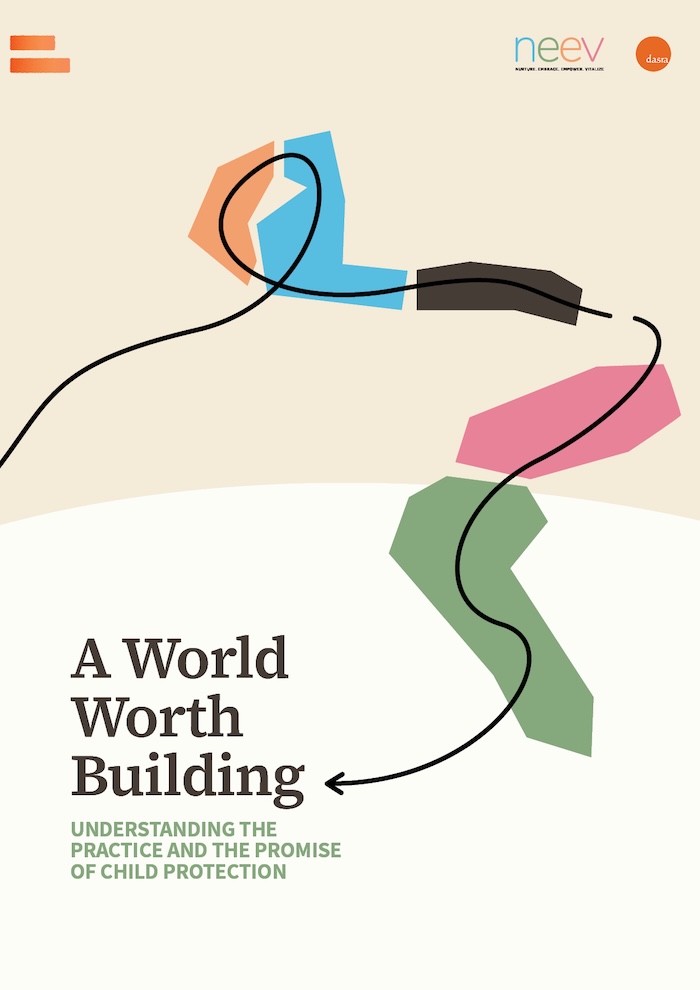
Produced by the Transform NEEV Collective and Dasra, with support from UBS Optimus Foundation, this report argues that child protection must be understood not as a narrow welfare issue, but as a critical indicator of broader systems performance. The extent to which institutions are able to safeguard children reflects the strength of governance structures, social protection systems, public health infrastructure, and resilience to economic and environmental shocks. Equally, systems designed with children at their center generate broader developmental dividends, strengthening equity, institutional responsiveness, and long-term societal resilience.
The report finds that child vulnerability in India is shaped by an increasingly complex and interconnected set of structural risks, including climate-induced displacement, distress migration, digital exposure, fragmented service delivery, weak case management systems, and persistent inequities related to gender, caste, and disability. Addressing these challenges requires a fundamental reorientation of child protection strategy, from reactive, incident-driven responses toward preventive, systems-based approaches embedded across education, health, justice, urban planning, and social protection. Child protection outcomes cannot be treated as isolated sectoral concerns; they are inseparable from the broader functioning of interconnected public systems.
Drawing on implementation evidence from Transform NEEV partners, including Leher, Miracle Foundation India, Prerana, and UNICEF, the report demonstrates that this systemic shift is both feasible and scalable. Community-based, family-centered models, when adequately resourced and integrated with government systems, can identify vulnerabilities earlier, reduce family separation, and deliver stronger developmental outcomes than institutional care, often at comparable or lower cost. Innovations such as community-led governance structures have shown measurable effectiveness in localized risk identification and response coordination, while data-enabled tools like Miracle Foundation India’s Thrive Scale are strengthening frontline decision-making through evidence-based case management. Prerana’s continuum-of-care model further illustrates that sustained, relationship-based support is essential to disrupting intergenerational cycles of harm.
The report also identifies five priority areas for action: strengthening district-level workforce capacity, data infrastructure, and institutional systems; redirecting resources toward community- and family-centered approaches over institutional care; deploying flexible, multi-year capital to embed child protection across adjacent sectors such as health, education, and climate resilience; investing in narrative change to reposition child protection as foundational development infrastructure; and building the longitudinal evidence base required to demonstrate the long-term returns of preventive investment.
The choices made over the coming years will determine whether India builds genuinely anticipatory child protection systems or remains constrained by reactive frameworks. Domestic philanthropy is uniquely positioned to catalyze this transition through its flexibility, risk appetite, and ability to convene government and civil society actors around shared systemic goals. Investing in child protection is not solely a moral imperative; it is a strategic investment in India’s long-term resilience, social cohesion, and inclusive development trajectory. Systems that are capable of protecting children are, ultimately, systems better equipped to deliver sustainable progress for all.



 Research Reports